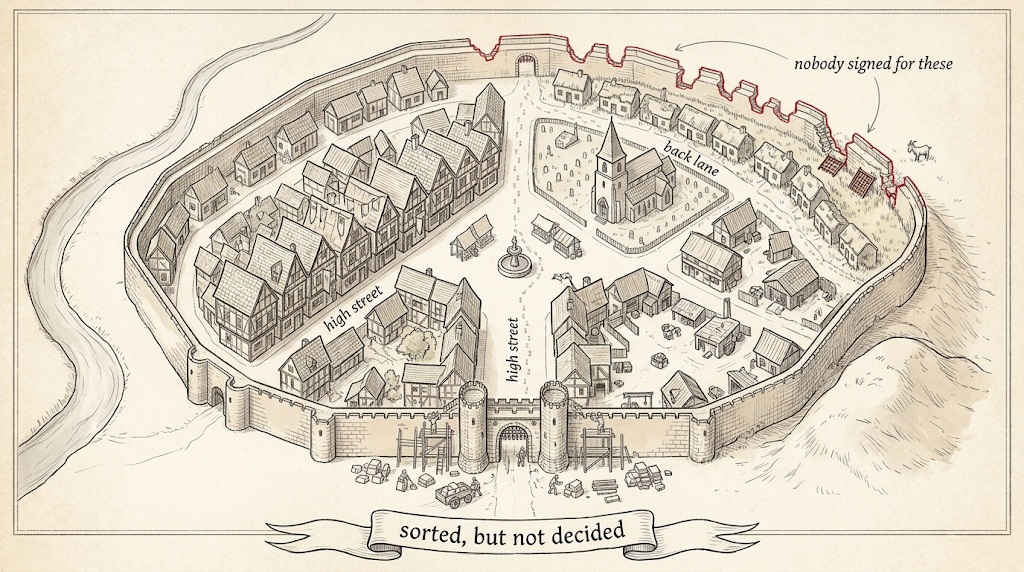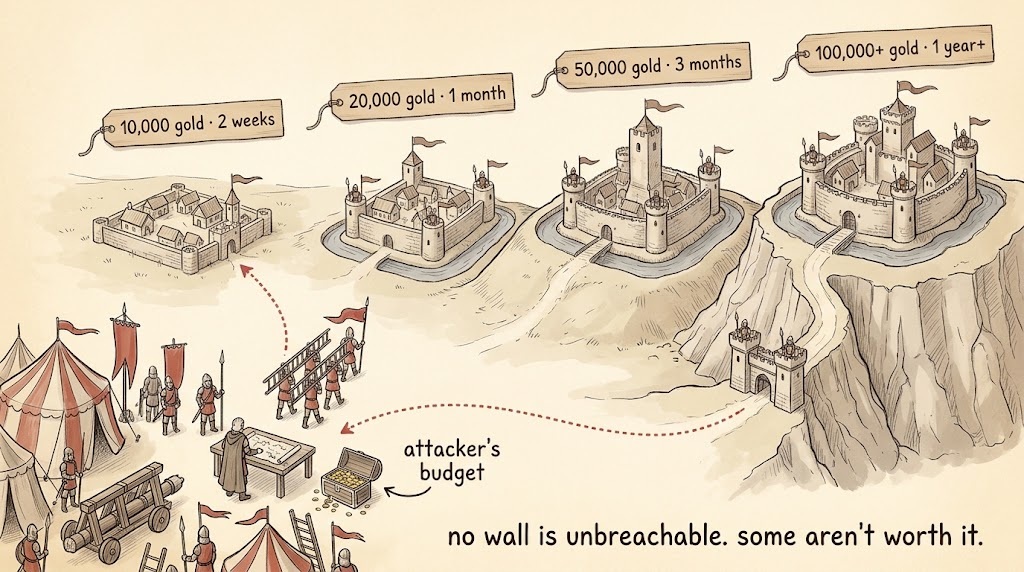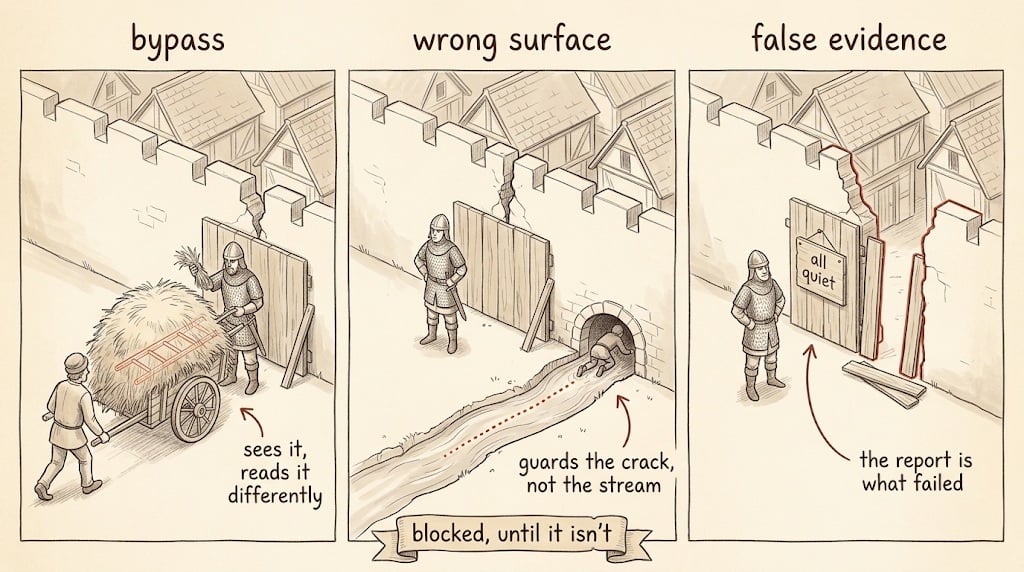
A control that makes a mass scanner give up does little against an attacker who wants your company specifically. I find it useful to separate three cases by how much effort an attacker is prepared to spend on one particular target.
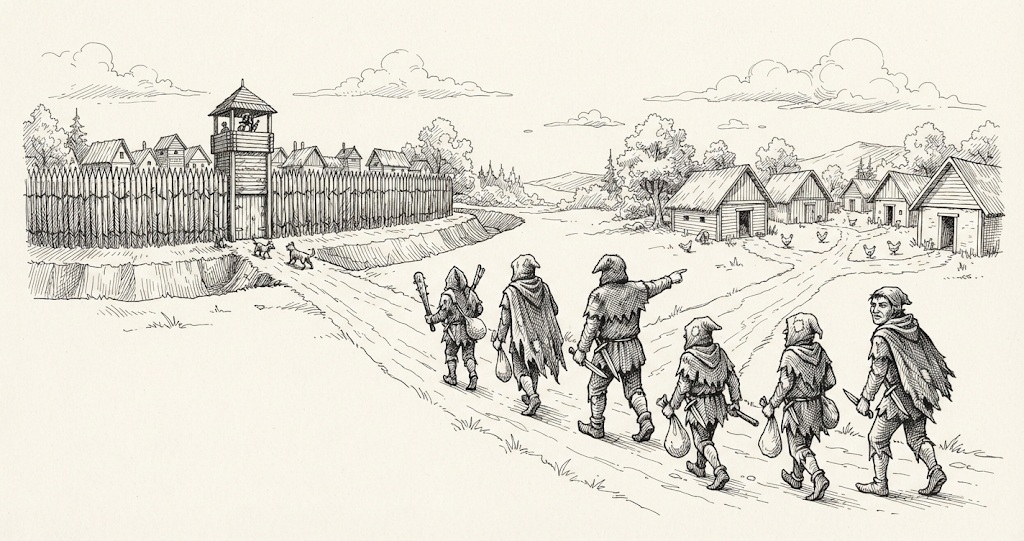
In a mass campaign you are one of thousands of targets. Computing resources and IP addresses cost the attacker little, so what limits them is the time each target gets. As far as friction is concerned, making the scanner move on to the next address may be enough.
In the second case your company is of interest, as one of perhaps a hundred targets of the same kind. The attacker has a time budget and a set of known methods for each of them. Friction is useful here too, since the attacker can still give up on you, although it takes more of it. The aim is to make continuing against you more expensive than moving on to another target. Decoys and canary credentials help as well, because they can reveal the attempt before the attacker makes that choice.
In the third case the attacker needs your company specifically. They change tools and methods and come back after a failed attempt, so counting on them to give up would be a mistake. Friction buys time only if someone is able to detect the attack and respond. The business also needs a clear view of what happens if the attacker eventually gets through.
In my practice, clients usually ask for one defense profile that covers everything, which is a reasonable request, since every additional profile costs more to maintain. The same profile can serve all three cases, but it has to be evaluated differently in each.
About the author
- Product manager and security architect. I built security data platforms and anti-fraud analytics, and now publish independent research on security markets, Exposure Management and security architecture. CISSP.
Comments
Join the discussionNo comments yet. Be the first to comment.